 Support
  Order Parts & Supplies

Peak Season Was a Stress Test. Here’s What It Probably Revealed About Your Operation.
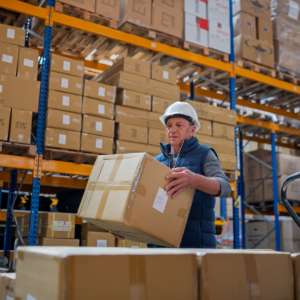 Peak season doesn’t lie.
When order volume jumps, and shipping windows shrink, the weak spots show up fast. Overtime climbs, supervisors turn into firefighters, and what was once a small process issue turns into a daily headache.
If you’re responsible for operations and already thinking about the late 2026 rush, this past peak was more than a busy quarter, but a full-scale stress test.
Here is what it likely revealed.
You’re More Dependent on Labor Than You Want to Be
Most operations look stable in steady-state conditions. Add 30 percent more volume, and the math changes.
Did you rely on:
- Overtime to hit daily targets?
- Rapid onboarding of seasonal workers?
- Supervisors stepping into picking or packing just to keep orders moving?
That’s not unusual, but it does tell you something important. Your throughput scales mainly with people.
The challenge is that labor doesn’t scale cleanly. Productivity varies, training takes time, and turnover tends to rise during peak. And each added person increases complexity on the floor.
This is usually where warehouse peak season automation becomes part of the 2026 conversation. Not as a replacement for your team, but to stabilize output. Automated storage, robotic palletizing, conveyor sortation and intuitive picking solutions can absorb volume without requiring proportional headcount increases.
If this peak felt harder than last year’s, that’s a signal.
Bottlenecks Became Obvious
Peak doesn’t create bottlenecks but tends to expose the ones you’ve been living with the whole time.
Maybe receiving backed up for days after large inbound shipments. Maybe picking zones were uneven, with one aisle slammed while another stayed light. Maybe packing stations turned into a wall of half-finished orders.
In slower months, these imbalances are manageable. Under pressure, they compound.
Look at your data from peak:
- Where did work-in-progress pile up?
- Where did order cycle time spike?
- Where did managers spend most of their time troubleshooting?
That’s where automation should be evaluated first.
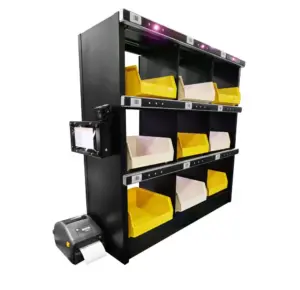
If travel time was the issue, layout changes or goods-to-person (g2p) may help. If accuracy dipped in picking, technologies like pick-to-light or automated validation can reduce errors at the scale. If shipping became a choke point, automated sortation might be worth modeling.
Peak season gave you real-world performance data. Use it before memory fades.
Your Systems Were Either a Help or a Hindrance
Technology should reduce chaos, not add to it.
Did your WMS handle wave releases smoothly? Could you see inventory and order status in real time? Or were teams building manual workarounds just to stay afloat?
Spreadsheets appearing during peak is rarely a good sign.
Warehouse peak season automation isn’t only about robotics. It’s also about integration. When your WMS, material handling systems, and reporting tools work together, supervisors can make decisions based on live conditions instead of yesterday’s numbers.
If your team spent peak racing instead of planning ahead within the shift, that’s something to fix for peak season 2026.
Not Sure Where to Start for 2026 Peak?
Planning for warehouse peak season automation can feel overwhelming, especially if you’re not sure which constraint to solve first.
If you want a practical starting point, book time with our automation specialists. We’ll look at your current operation, your volume projections, and your pressure points. If we don’t offer the right solution for your situation, we’ll point you towards someone who does.
Accuracy and Quality Control Were Tested
Even strong operations see accuracy drift during peak with more volume, new hires, and fatigue.
A small increase in mis-picks can quickly turn into higher return rates and extra freight costs. If your quality control team was stretched thin or customer complaints ticked up, that’s worth quantifying now.
Automation can help here in practical ways. Barcode validation, automated sortation, and guided picking systems reduce reliance on memory and manual double-checks. They also create consistency across shifts, which becomes critical when seasonal labor is involved.
Accuracy under pressure is one of the clearest indicators of how resilient your operation really is.
Flexibility Mattered More Than Raw Capacity
Peak rarely follows a neat curve once promotions hit and carrier cut-off times change (to name a couple).
Operations that performed well were usually the ones that could adapt midstream. They could re-slot fast movers, rebalance labor, and redirect flow without shutting down half the building.
As you plan for 2026, don’t just ask, “How much more volume can we handle?” Ask, “How quickly can we adjust?”
Many warehouse peak season automation solutions today are modular. You can automate one process or zone first, measure results, and expand over time. That approach lowers risk and keeps capital aligned with growth.
Peak season already showed you where the strain is. The worst move now is to treat it as just another busy quarter and move on.
Pull the data. Talk to your supervisors. Model a 20 percent increase on top of what you just experienced.
If that scenario makes you uneasy, it’s time to rethink how your operation scales.
2026 peak planning starts now.