 Support
  Order Parts & Supplies

Why Warehouse Safety Matters
Warehouse safety affects far more than compliance metrics. In fulfillment centers, distribution facilities, and third-party logistics (3PL) operations, injuries can disrupt productivity, contribute to turnover, increase labor costs, and place added pressure on already stretched teams.
As e-commerce continues to drive higher order volumes and faster delivery expectations, warehouse employees are often tasked with moving, sorting, scanning, and handling thousands of items each day. While these activities are essential to keeping products flowing through the supply chain, they can also expose workers to physical strain and injury when processes, workspaces, and equipment are not designed with safety in mind.
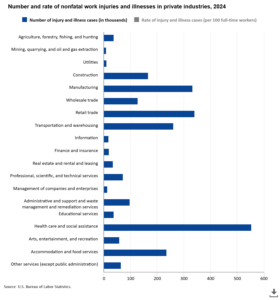 While warehouses, fulfillment centers, and manufacturing facilities have become increasingly sophisticated, workplace injuries remain a significant challenge. According to the U.S. Bureau of Labor Statistics, manufacturing reported nearly 333,000 nonfatal workplace injuries and illnesses in 2024, reinforcing the importance of proactive safety initiatives in environments where employees interact with products, equipment, and material handling systems every day. Warehouse operators that prioritize safety can help reduce these risks while also improving employee retention, operational consistency, and overall productivity.
Safety considerations extend beyond training programs and compliance requirements. The design of equipment, workstations, and facility layouts can all influence how employees interact with their environment throughout a shift. Factors such as visibility, accessibility, maintenance access, material flow, and ergonomic design can help reduce unnecessary movement and physical strain while supporting more efficient operations.
Ultimately, warehouse safety and operational performance are closely connected. Many of the same improvements that help reduce injuries can also help create a more efficient, reliable operation.
Common Injuries in Fulfillment Centers and Parcel Operations
 Fulfillment centers and parcel operations process thousands of products and packages every day, often requiring employees to perform physically demanding tasks for extended periods.
The most common warehouse injuries include repetitive motion injuries, lifting-related strains, slips and falls, and fatigue-related incidents. Many of these injuries are linked to manual processes, high-volume workloads, and operational inefficiencies that place additional physical demands on employees.
Understanding where these risks originate is an important first step toward creating a safer workplace.
Repetitive Motion Injuries
Not every workplace injury occurs suddenly. Some develop gradually as employees perform the same tasks repeatedly throughout the day.
In fulfillment and parcel operations, repetitive activities often include picking items from storage locations, scanning products, applying shipping labels, packing orders, processing returns, and sorting packages. While each movement may seem minor on its own, repeating the same motions hundreds or even thousands of times during a shift can place significant strain on muscles, tendons, and joints.
Over time, workers may experience discomfort in their wrists, shoulders, elbows, neck, or back. If left unaddressed, repetitive strain injuries can affect productivity, increase absenteeism, and contribute to long-term health concerns.
Workstation design, workflow layout, and process optimization all play a key role in reducing unnecessary movement and supporting better warehouse ergonomics.
Lifting and Material Handling Injuries
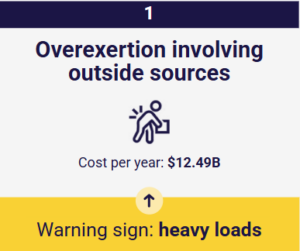
Manual material handling remains one of the most common causes of workplace injuries in warehouse environments.
Unlike operations that primarily move uniform palletized loads, fulfillment centers handle an enormous variety of package sizes, shapes, and weights. Employees may encounter lightweight polybags, oversized cartons, irregularly shaped products, and customer returns throughout the course of a single shift.
This variability often requires workers to repeatedly adjust how they lift, carry, and position items. Bending, twisting, reaching, and handling awkward loads can increase the risk of strains, sprains, and other musculoskeletal injuries.
The challenge becomes even greater during peak, when rising order volumes and extended work hours place additional physical demands on warehouse teams.
As more retailers adopt flexible packaging options such as polybags, operators must also account for packages with uneven weight distribution that can be more difficult to handle consistently than traditional corrugated boxes.
Slips, Trips, and Falls
Some of the most common warehouse injuries have little to do with heavy lifting or material handling equipment.
Slips, trips, and falls can occur in nearly any facility and are often the result of everyday operational conditions. Packaging debris, stretch wrap, loose polybags, congested work areas, damaged flooring, and temporary peak-season workstations can all create hazards if not effectively managed.
As operations expand to accommodate changing demand, temporary processes and overflow storage areas can sometimes become permanent fixtures. Over time, these conditions may increase the likelihood of accidents and make it more difficult for employees to move safely throughout the facility.
Maintaining clear walkways, organized workspaces, and consistent housekeeping practices remains one of the most effective ways to reduce these risks.
Fatigue and Overexertion
Fatigue is often an overlooked factor in warehouse safety, but it can contribute to a wide range of workplace incidents.
Many fulfillment centers operate across multiple shifts and experience significant volume spikes during peak periods. Combined with labor shortages and demanding productivity goals, these conditions can place considerable physical and mental strain on employees. During these periods, operations can face the challenge of increasing throughput without overburdening their workforce, particularly when staffing levels do not keep pace with demand. As we discussed in our article on automation scaling for 3PLs, sustainable growth requires balancing operational performance with the well-being of the people responsible for keeping orders moving.
As fatigue increases, workers may experience slower reaction times, reduced situational awareness, decreased focus, and poor decision-making. Employees are also more likely to use improper lifting techniques or make mistakes that can result in injuries, product damage, or operational disruptions.
Organizations that focus on workload management, process efficiency, and employee well-being are often better positioned to reduce fatigue-related risks while supporting productivity.
Hidden Safety Risks Caused by Operational Inefficiencies
When workplace injuries occur, it is easy to focus on the immediate event that caused the incident. In many cases, however, the root cause can be traced back to operational inefficiencies that create unnecessary physical demands on employees.
One common example is excessive manual handling. Every time a package must be touched, moved, resorted, or reprocessed, employees must perform additional lifting, carrying, reaching, or walking. These extra touches may seem insignificant individually, but they can add up quickly over the course of a shift.
Bottlenecks can create similar challenges. When work begins to accumulate at packing stations, sortation areas, or conveyor transfer points, employees often compensate by manually moving items or working at a faster pace to keep operations moving. This can increase physical strain while also creating opportunities for mistakes and injuries. Many of the issues that impact workplace safety are closely related to the same operational roadblocks that affect throughput, accuracy, and labor efficiency across warehouse environments.
Learn more about these common operational challenges in our article, 5 Common Operational Roadblocks and How We Actually Solve Them.
Labor shortages can further amplify safety concerns. When fewer employees are available to complete the same amount of work, physical workloads often increase across the operation. Workers may spend more time performing repetitive tasks, handling exceptions, or covering multiple responsibilities throughout a shift.
Temporary workarounds can also introduce risk. A process that was originally intended as a short-term solution may gradually become part of daily operations, resulting in unnecessary movement, congestion, or manual handling that creates more opportunities for injury. Over time, these inefficiencies can become so familiar that they are viewed as normal parts of the workflow. Recognizing and addressing them is often one of the first steps organizations take when evaluating opportunities for process improvement and warehouse automation.
Many warehouse safety challenges can be traced back to the way work moves through an operation. When inefficiencies create unnecessary movement, manual handling, congestion, or fatigue, injury risk often rises alongside them. Understanding these connections is an important first step toward building a safer workplace.
Building a Safety-First Culture
The next step in building a safer workplace is to begin developing a “Safety First” culture in all levels of your organization. This can help avoid creating hidden safety risks and work to prevent common workplace injuries before they occur; and allow your organization to develop plans for when injuries do occur.
What Is a Safety-First Culture?
A safety-first culture refers to how safety is discussed, implemented, and managed in your workplace at all levels. Developing a safety-first culture must start at the top, with upper management and executives taking active roles in starting and maintaining a safety-first mindset.
“Safety culture is about what people do when no one is watching…Culture is built on repetition, visibility, and reinforcement.” – Mack McCarty, “How to Build a Safety-First Culture: A Step-By-Step Guide for Managers” (2025) for USNSD
How to Build a Safety-First Culture
Building a safety-first culture doesn’t happen overnight, but there are steps you can take to begin changing the current culture of your workplace:
- A change in culture must start from the top à An effective and long-term culture of safety must start with the top leadership in your organization. Leaders need to be visible in the commitment to safety both personally (abiding by safety protocols and wearing PPE) and through the commitment of resources (monetary and labor) from the organization.
- Safety expectations, policies, and standards need to be clearly communicated and defined à Rather than using generic safety policies, focus on developing specific, clear, consistent, and simple policies. These policies need to be repeated through talks, plans, posters and signage, team meetings, onboarding, etc.
- Actively involve employees in a safety-first culture à Employees need to be actively brought in and encouraged to participate in safety-first culture. This includes training employees to be competent in their work, involving them in decision-making about safety policies, and developing a system that allows employees to report safety violations and unsafe behaviors.
- Develop leaders who promote a safety-first mindset à Supervisors and managers control how rules and policies are enforced, and how their employees view their workplace. Support and invest in developing supervisors with strong leadership skills and a commitment to the safety of their teams.
- Conduct regular safety audits and inspections of policies and actions à Your workplace is ever evolving and changing and your culture should too. Conducting regular audits can help decision-makers visualize where policy is failing but also where policy succeeds. This can help create direct funding for training, programs, and employee recognition.
The Top Five Safety Metrics Every Operation Should Track
During this process, your organization will need to track and measure key performance indicators (KPIs); by tracking KPIs, your organization can identify areas of improvement and generate plans to achieve that improvement.
- Total Recordable Incident Rate (TRIR) – This rate measures the total number of recordable safety incidents and injuries across your operation during a period of time.
- Date Away, Restricted or Transferred Rate (DART) – This rate measures the number of days an employee is away from their job or restricted from working as a result of a work-related injury or illness.
- Average Time to Resolution of Issues – This metric tracks the average elapsed times between hazard detection and a verified resolution.
- Lost Time Injury Frequency Rate (LTIFR) – This metric measures the frequency of injuries that result in lost work time, expressed per 1,000,000 hours worked.
- Near Miss Rates – This is one of the most powerful leading indicators available to safety teams. A near miss is an unplanned event that did not result in injury, illness, or damage but had the potential to do so.
How Automation Can Improve Safety
Alongside developing your organization’s workplace culture, you may also be considering other methods of improving safety in your workplace. One such method is automation. Automation is improving workplace safety through real-time monitoring systems, ergonomic workstation and workspace design, and a reduction in accidents (and downtime).
Real-time monitoring systems are empowered by networks of sensors, conveyors, and robotic technology, enabling managers to monitor workplace conditions. These technologies can help prevent human workers from getting into accidents, track and detect patterns of safety issues, and allow management to predict and avert risks.
Automation of the workplace and workstations can reduce or eliminate repetitive motions, such as lifting or placing items, leading to a greater reduction in accidents and worker downtime.
The Future of Warehouse Safety
Current trends in warehouse safety focus on implementing predictive safety measures, real-time monitoring, and employee wellness. Many companies are working to implement these trends via a mix of improved training, automation, and AI-based tools.
For companies looking toward the future, many are focusing on implementing safety products, protocols, and policy centered around changing OSHA guidelines. One major update to OSHA guidelines is the requirement to begin real-time heat monitoring to prevent heat-related illnesses, injury, and death.